
Polyglactin 910
Polyglactin 910 is a small molecule pharmaceutical. It is currently being investigated in clinical studies.
Download report
Favorite
Events Timeline
Commercial
Clinical
Drug
Target
Variants
Financial
Trends
Safety
Events Timeline
5D
1M
3M
6M
YTD
1Y
2Y
5Y
Max
Events
FDA approval date
EMA approval date
Patent expiration date
Study first post date
Last update post date
Start date
Primary completion date
Completion date
Results first post date
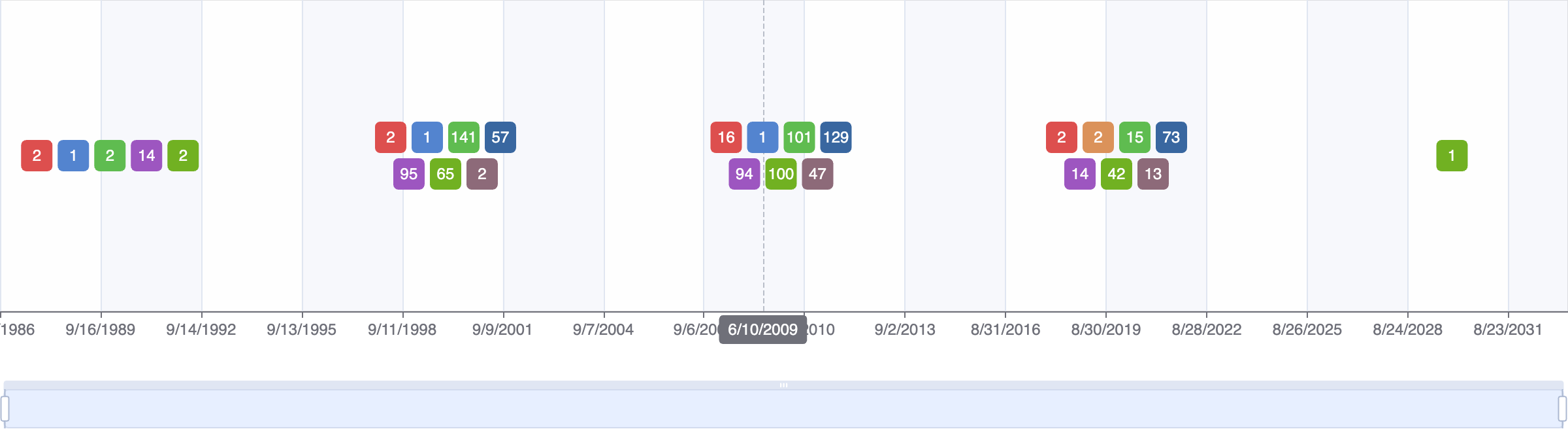
Mock data
Subscribe for the real data
Subscribe for the real data
Commercial
No data
Clinical
Clinical Trials
396 clinical trials
View more details
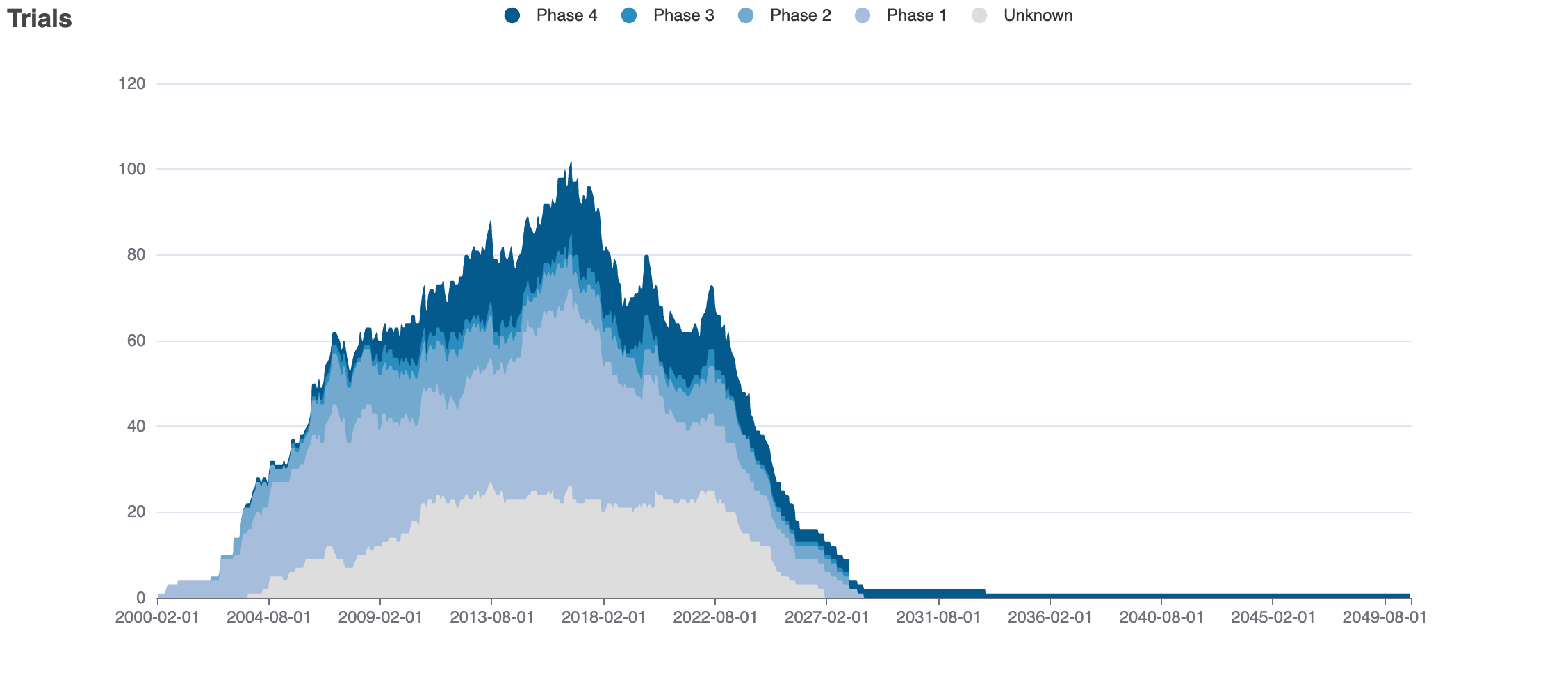
Mock data
Subscribe for the real data
Subscribe for the real data
Indications Phases 4
Indication | MeSH | Ontology | ICD-10 | Ph 1 | Ph 2 | Ph 3 | Ph 4 | Other | Total |
|---|---|---|---|---|---|---|---|---|---|
| Surgical wound infection | D013530 | — | — | — | — | 1 | 8 | 11 | 20 |
| Hernia | D006547 | — | K40-K46 | — | 5 | 4 | 1 | 13 | 19 |
| Infections | D007239 | EFO_0000544 | — | — | — | 1 | 8 | 10 | 19 |
| Wounds and injuries | D014947 | — | T14.8 | — | 1 | — | 4 | 13 | 18 |
| Wound infection | D014946 | — | — | 1 | — | — | 6 | 9 | 16 |
| Communicable diseases | D003141 | — | — | — | — | 1 | 5 | 7 | 13 |
| Surgical wound | D000072836 | — | — | — | — | 1 | 7 | 5 | 13 |
| Cesarean section | D002585 | — | — | — | — | 1 | 1 | 8 | 10 |
| Hemorrhage | D006470 | MP_0001914 | R58 | — | — | — | 1 | 8 | 9 |
| Breast neoplasms | D001943 | EFO_0003869 | C50 | — | — | — | 2 | 6 | 8 |
Show 25 more
Indications Phases 3
Indication | MeSH | Ontology | ICD-10 | Ph 1 | Ph 2 | Ph 3 | Ph 4 | Other | Total |
|---|---|---|---|---|---|---|---|---|---|
| Cicatrix | D002921 | — | L90.5 | 1 | 1 | 1 | — | 8 | 10 |
| Gingival recession | D005889 | — | K06.0 | — | — | 1 | — | 7 | 8 |
| Bone resorption | D001862 | — | — | — | — | 1 | — | 5 | 6 |
| Emergencies | D004630 | — | — | — | 1 | 1 | — | 2 | 3 |
| Exotropia | D005099 | — | H50.1 | — | 1 | 1 | — | 1 | 2 |
| Rectal neoplasms | D012004 | — | — | — | — | 1 | — | 1 | 2 |
| Urinary diversion | D014547 | — | — | — | 1 | 1 | — | — | 1 |
| Laparotomy | D007813 | — | — | — | 1 | 1 | — | — | 1 |
| Hypertrophic cicatrix | D017439 | — | L91.0 | — | 1 | 1 | — | — | 1 |
| Keloid | D007627 | EFO_0004212 | L91.0 | — | 1 | 1 | — | — | 1 |
Show 1 more
Indications Phases 2
Indication | MeSH | Ontology | ICD-10 | Ph 1 | Ph 2 | Ph 3 | Ph 4 | Other | Total |
|---|---|---|---|---|---|---|---|---|---|
| Fistula | D005402 | — | — | — | 1 | — | — | 17 | 18 |
| Rectal fistula | D012003 | — | K60.3 | — | 1 | — | — | 12 | 13 |
| Ventral hernia | D006555 | EFO_1001866 | K43 | — | 1 | — | — | 3 | 4 |
| Endometriosis | D004715 | EFO_0001065 | N80 | — | 1 | — | — | 2 | 3 |
| Hysterectomy | D007044 | EFO_0003881 | — | — | 1 | — | — | 2 | 3 |
| Cervical intraepithelial neoplasia | — | — | D06 | — | 1 | — | — | — | 1 |
| Uterine cervical neoplasms | D002583 | — | — | — | 1 | — | — | — | 1 |
| Uterine cervical dysplasia | D002578 | EFO_1000910 | N87 | — | 1 | — | — | — | 1 |
| Leiomyoma | D007889 | — | D25 | — | 1 | — | — | — | 1 |
| Scoliosis | D012600 | EFO_0004273 | M41 | — | 1 | — | — | — | 1 |
Indications Phases 1
No data
Indications Without Phase
Indication | MeSH | Ontology | ICD-10 | Ph 1 | Ph 2 | Ph 3 | Ph 4 | Other | Total |
|---|---|---|---|---|---|---|---|---|---|
| Prolapse | D011391 | — | — | — | — | — | — | 16 | 16 |
| Postoperative pain | D010149 | — | G89.18 | — | — | — | — | 14 | 14 |
| Pelvic organ prolapse | D056887 | EFO_0004710 | — | — | — | — | — | 14 | 14 |
| Hypospadias | D007021 | EFO_0004209 | Q54 | — | — | — | — | 8 | 8 |
| Placenta accreta | D010921 | EFO_0007440 | O43.2 | — | — | — | — | 7 | 7 |
| Recurrence | D012008 | — | — | — | — | — | — | 6 | 6 |
| Inguinal hernia | D006552 | HP_0000023 | K40 | — | — | — | — | 6 | 6 |
| Surgical wound dehiscence | D013529 | — | T81.31 | — | — | — | — | 5 | 5 |
| Wound healing | D014945 | GO_0042060 | — | — | — | — | — | 5 | 5 |
| Postoperative complications | D011183 | — | — | — | — | — | — | 5 | 5 |
Show 185 more
Epidemiology
Epidemiological information for investigational and approved indications
View more details
Drug
General
| Drug common name | Polyglactin 910 |
| INN | _ |
| Description | Vicryl (polyglactin 910) is an absorbable, synthetic, usually braided suture, manufactured by Ethicon Inc., a subsidiary of Johnson and Johnson. A monofilament version is also made for use in ophthalmic practice. It is indicated for soft tissue approximation and ligation. The suture holds its tensile strength for approximately two to three weeks in tissue and is completely absorbed by acid hydrolysis within 8-10 weeks. Vicryl and other polyglycolic-acid sutures may also be treated for more rapid breakdown ("Vicryl Rapide") in rapidly healing tissues such as mucous membrane or impregnated with triclosan ("Vicryl Plus Antibacterial") to provide antimicrobial protection of the suture line. Because Vicryl is slow-absorbing and often braided, its use is contraindicated in the closure of any cutaneous wound exposed to the air, as it draws moisture from the healing tissue to the skin and allows bacteria and irritants to migrate into the wound. This may lead to high reactivity to the contaminants, poor wound healing, and eventually infection.[failed verification]
|
| Classification | Small molecule |
| Drug class | — |
| Image (chem structure or protein) |  |
| Structure (InChI/SMILES or Protein Sequence) | — |
Identifiers
| PDB | — |
| CAS-ID | 34346-01-5 |
| RxCUI | — |
| ChEMBL ID | CHEMBL2108539 |
| ChEBI ID | — |
| PubChem CID | — |
| DrugBank | — |
| UNII ID | 51L8Z461QZ (ChemIDplus, GSRS) |
Target
No data
Variants
No data
Financial
No data
Trends
No data
Safety
Black-box Warning
No Black-box warning
Adverse Events
0 adverse events reported
© 2020-2025 Collaborative Drug Discovery Inc. (CDD) | Terms of Use